
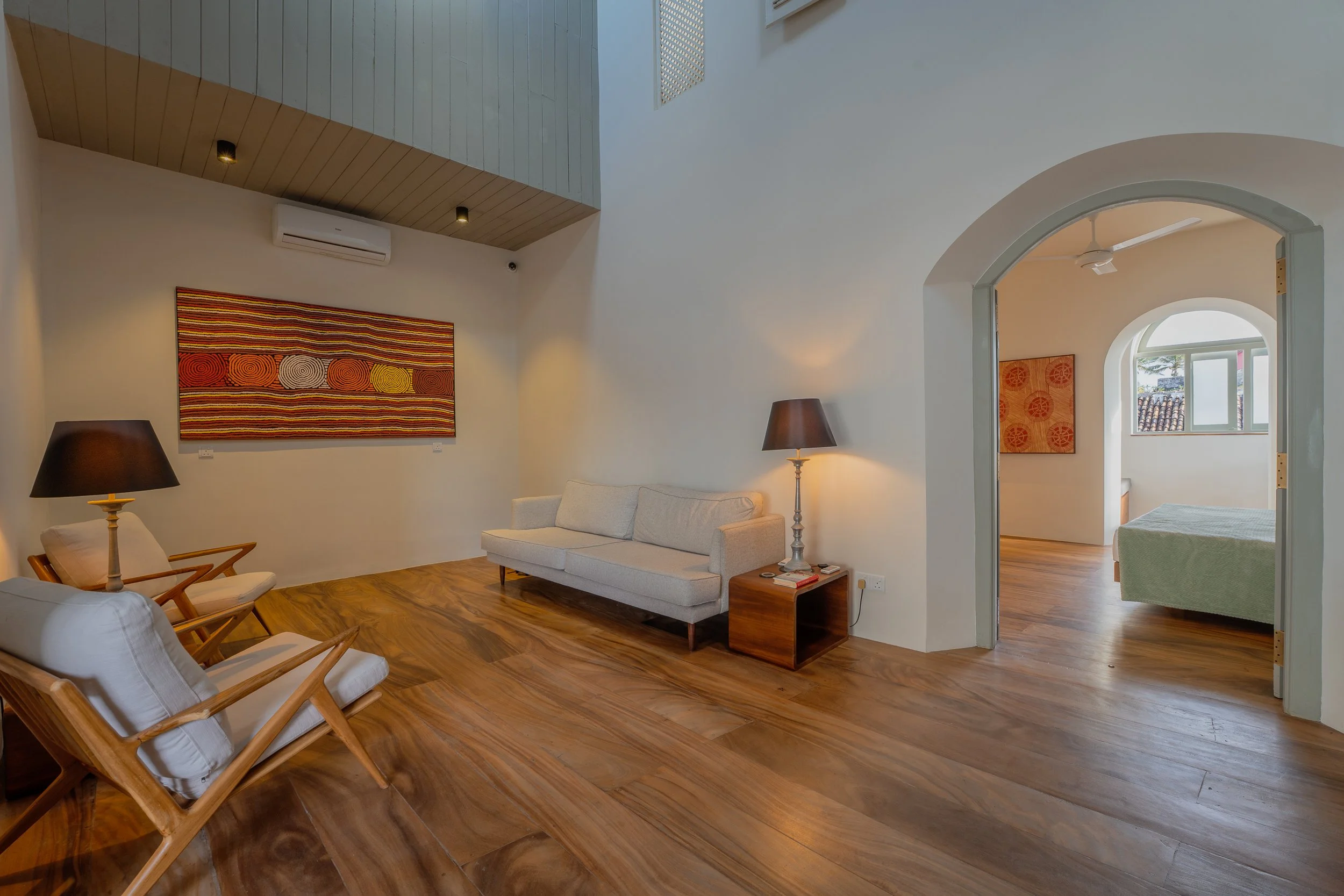
indigenous Australian art in a historic setting
1740 hosts a collection of indigenous Australian artwork. Some of the artists whose work we display have unfortunately passed away. We hope by displaying their artwork and telling their stories, we both honour the First Nations artists and encourage people to explore this fascinating and profound art movement. Should you wish to support these artists, links to artist-owned collectives can be found at the bottom of this page.
Papunya Tula is referenced throughout this document. The Papunya Tula Art movement was the epicentre of the aboriginal Australian art movement. In the 1970s in Papunya, a remote settlement in the Northern Territory, the long-held stories and traditions of indigenous Australians were first committed to permanent record, initially on the sides of buildings, subsequently on canvas. The Papunya Tula Art movement brought indigenous Australian art to a worldwide audience.
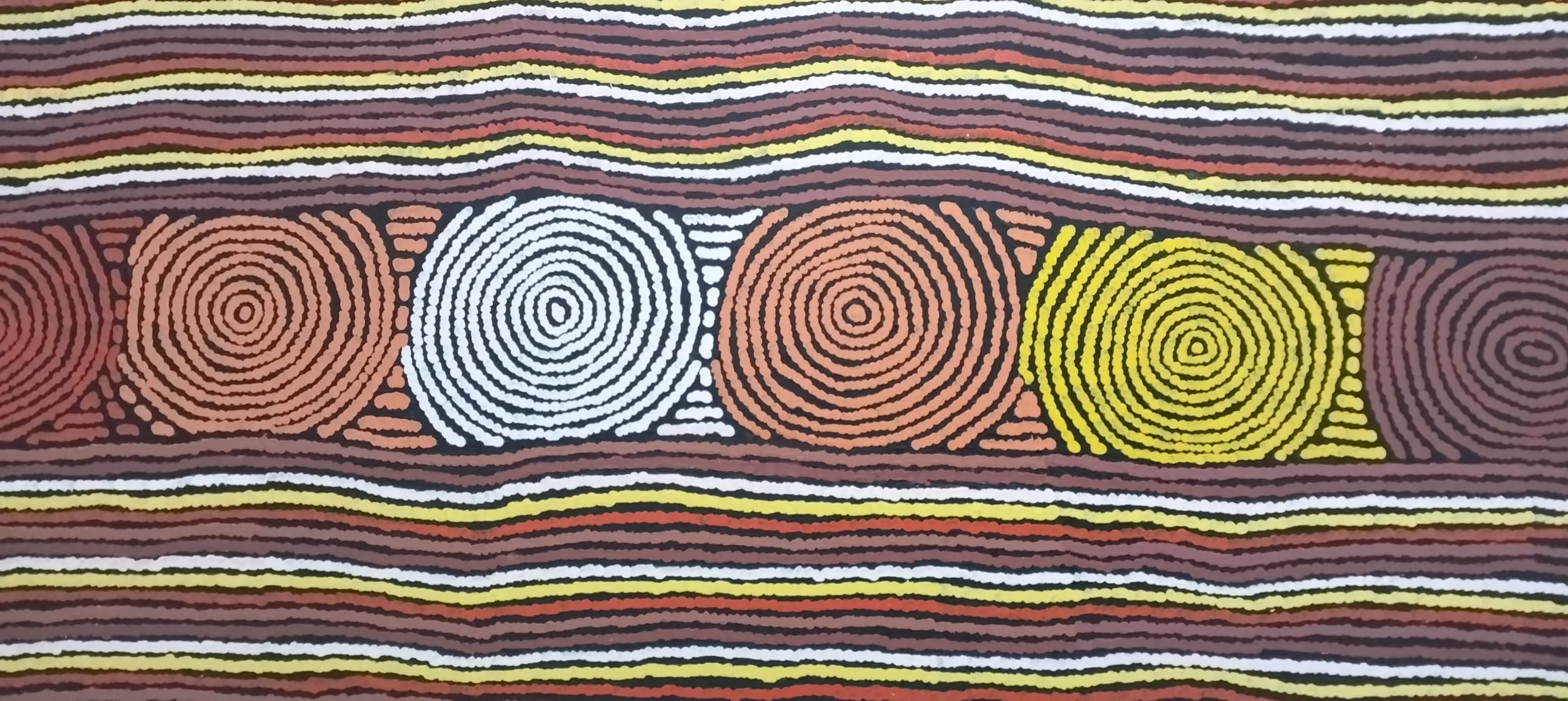
lupulgna
Displayed in the living room, Lupulgna was painted by Narabri Nakamara. It depicts the sandhill country associated with the rock hole site of Lupulgna. Rock holes were frequently represented by concentric circles. The painting features earthy pigments such as ochre which are a prominent feature of indigenous art.
Narabri Nakamara was a Pintupi woman born in Ikuntji (Haasts Bluff) around 1950. She was the daughter of a famous Papunya Tula artist Makinti Napananka. Narabri Nakamara started painting in 1999. Unfortunately, she passed away just eleven years later. In her short painting career, she featured in seven exhibitions across Australia.
papa tjukurrpa - nyumannu
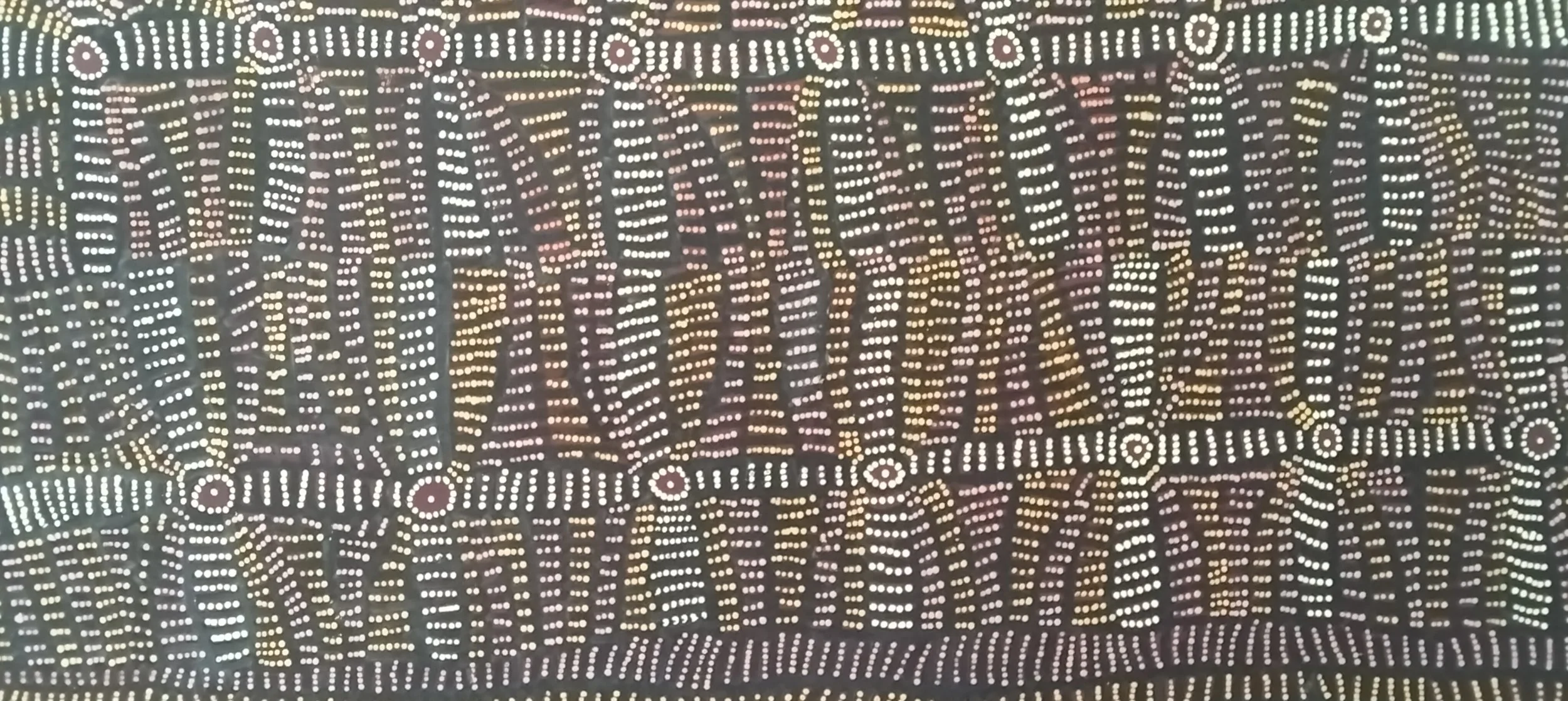
Displayed in the dining room, Papa Tjurkurrpa – Nyumannu was painted by Doris Bush Nungarrayi. Tjurkurrpa is usually referred to in English as Dreamtime or The Dreaming, descriptors widely regarded as reductive and inadequate. The Australian anthropologist WEH Stanner coined the term ‘everywhen’ for tjurkurrpa, and explained ‘one cannot fix the Dreaming in time; it was, and is, everywhen.’ A rudimentary explanation of tjurkurrpa is that it contains creation stories and a moral code for living today. Further reading is highly recommended! Papa tjurkurrpa – nyumannu is translated as dingo dreaming.
Doris Bush Nungarrayi is also a Northern Territory artist. She was born in Ikuntji around 1942. She was married to George Bush Tjungala, one of the founders of the Papunya Tula Artists movement. She won the 2023 Sulman Prize, and has exhibited widely.
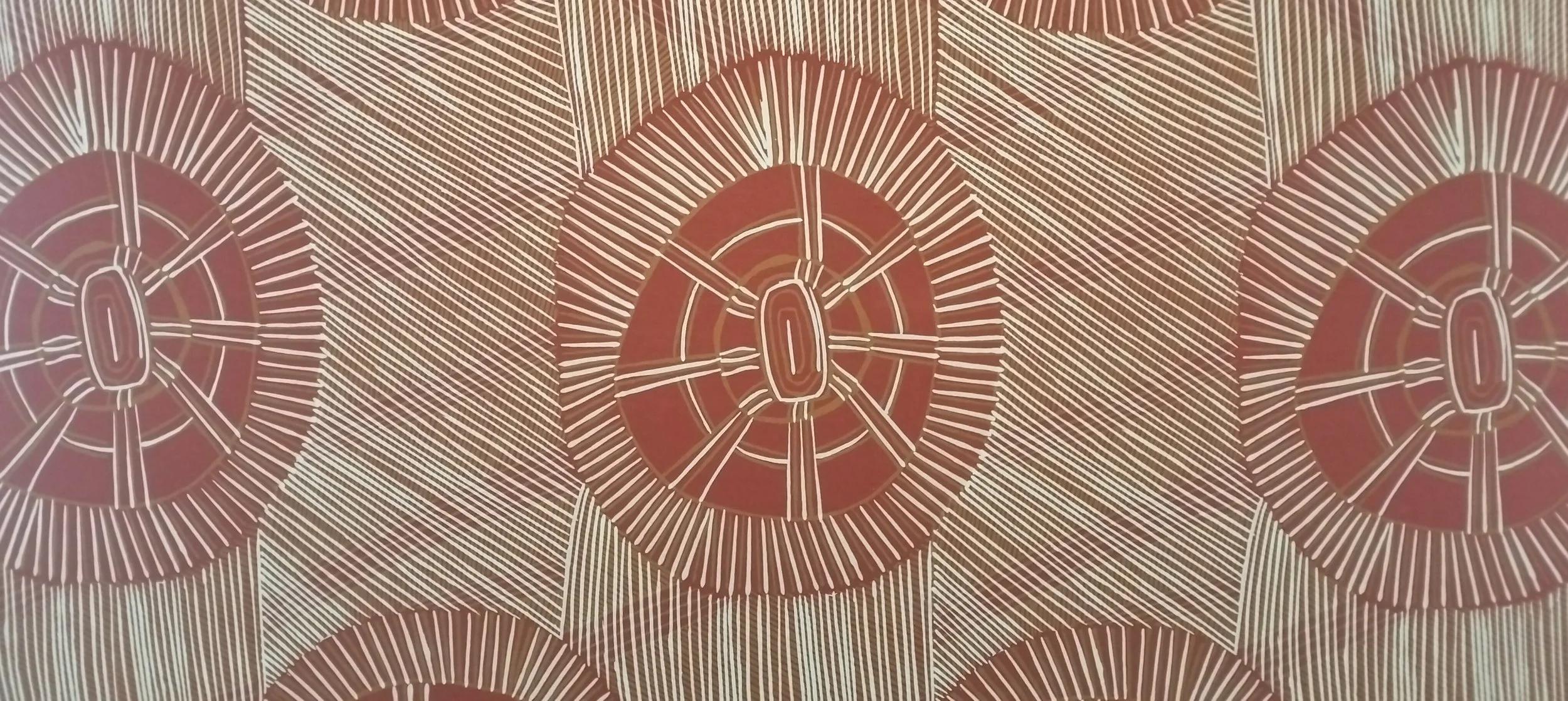
marebu
Displayed in the master bedroom Hiri Gal, Marebu is a screen print designed by Deborah Wurrkidj, a member of Babbarra Designs from Maningrida in Arnhem Land in the far north of Australia. Marebu, the circular patterns depicted in the print, are woven pandanus floor mats.
Deborah Wurrkidj was born in 1971 in Maningrida, and has worked at Babbarra Designs since 1991. She is a textile and tactile artist. She has exhibited across Australia and internationally.
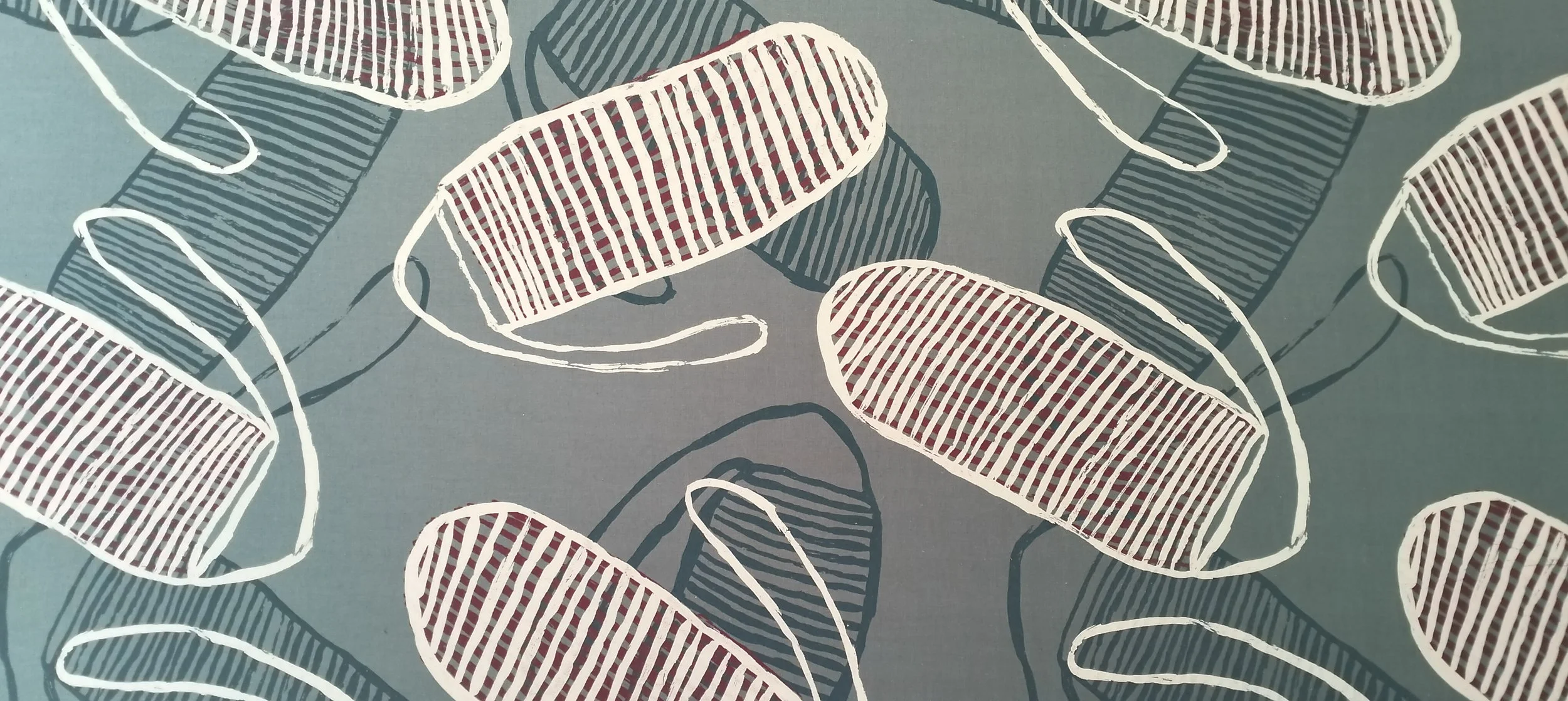
dili
Displayed in the courtyard bedroom which bears its name, Dili is a screen print designed by Dora Diagamu. Dili or dilly bags are large woven baskets used for carrying food, be it fish, gumnuts or berries. The word ‘dilly’ is more widely used, but it is thought to be derived from the word ‘dili’ in Turrubal, a language spoken in south-east Queensland.
Dora Diagamu was born in Maningrida in 1956. She worked with Babbarra Designs from 2007. Sadly, she passed away in December 2025. Her artwork is still available on the babbarra.com website. Purchases of her work help to support Dora Diagamu’s family.
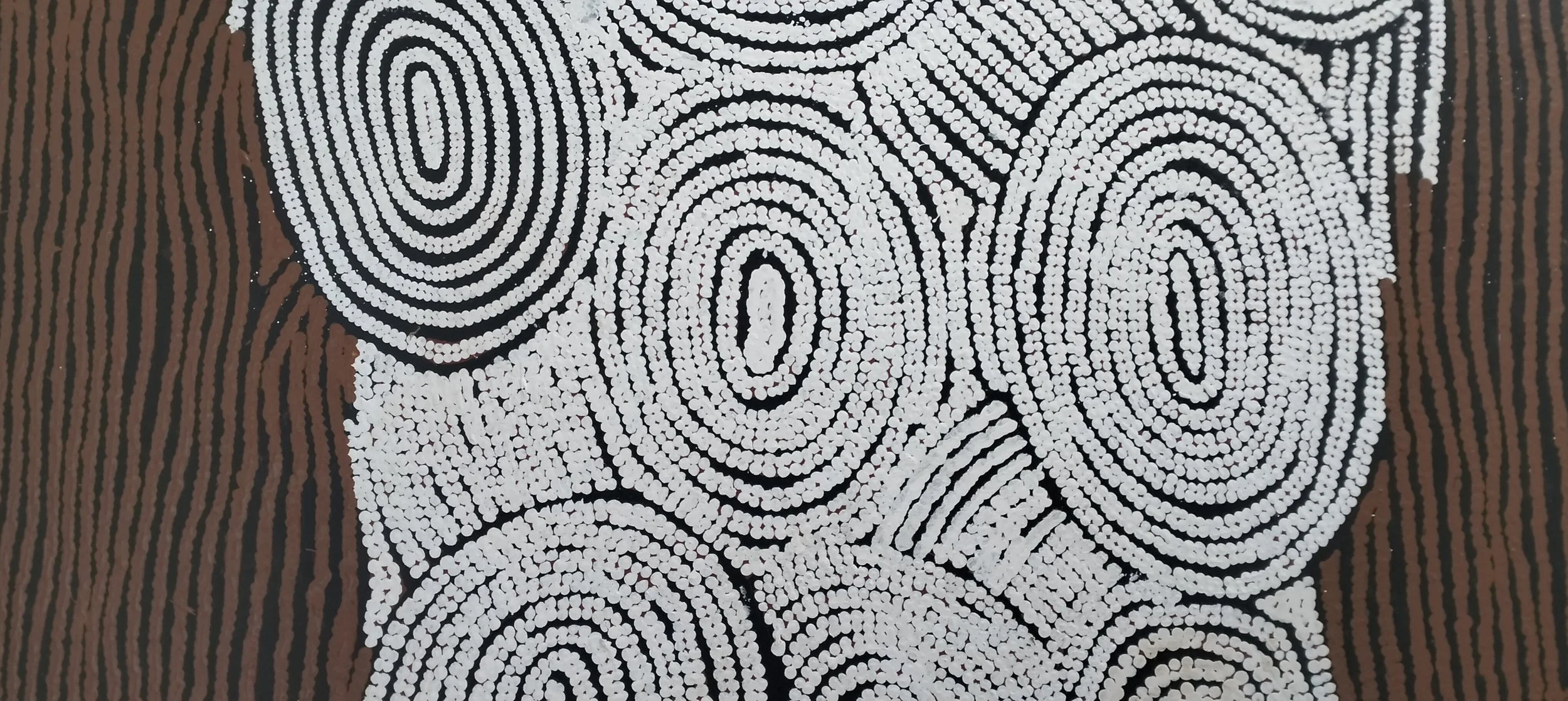
marrapinti
Displayed in the courtyard bedroom Ulu, Marrapinti was painted by Nanyuma Napangati, a Pintupi law woman. The painting depicts creation events at the rockhole site of Marrapinti, near Kiwikurra.
Nanyuma Napangati was born around 1944 in Kiwikurra. In 1999 she was involved in the Kiwirrkura Women’s Painting project, which auctioned works of art for the Western Desert Dialysis appeal. She danced at the opening ceremony of the Sydney Olympics in 2000. Nanyuma Napangati passed away in 2022.
yala dreaming
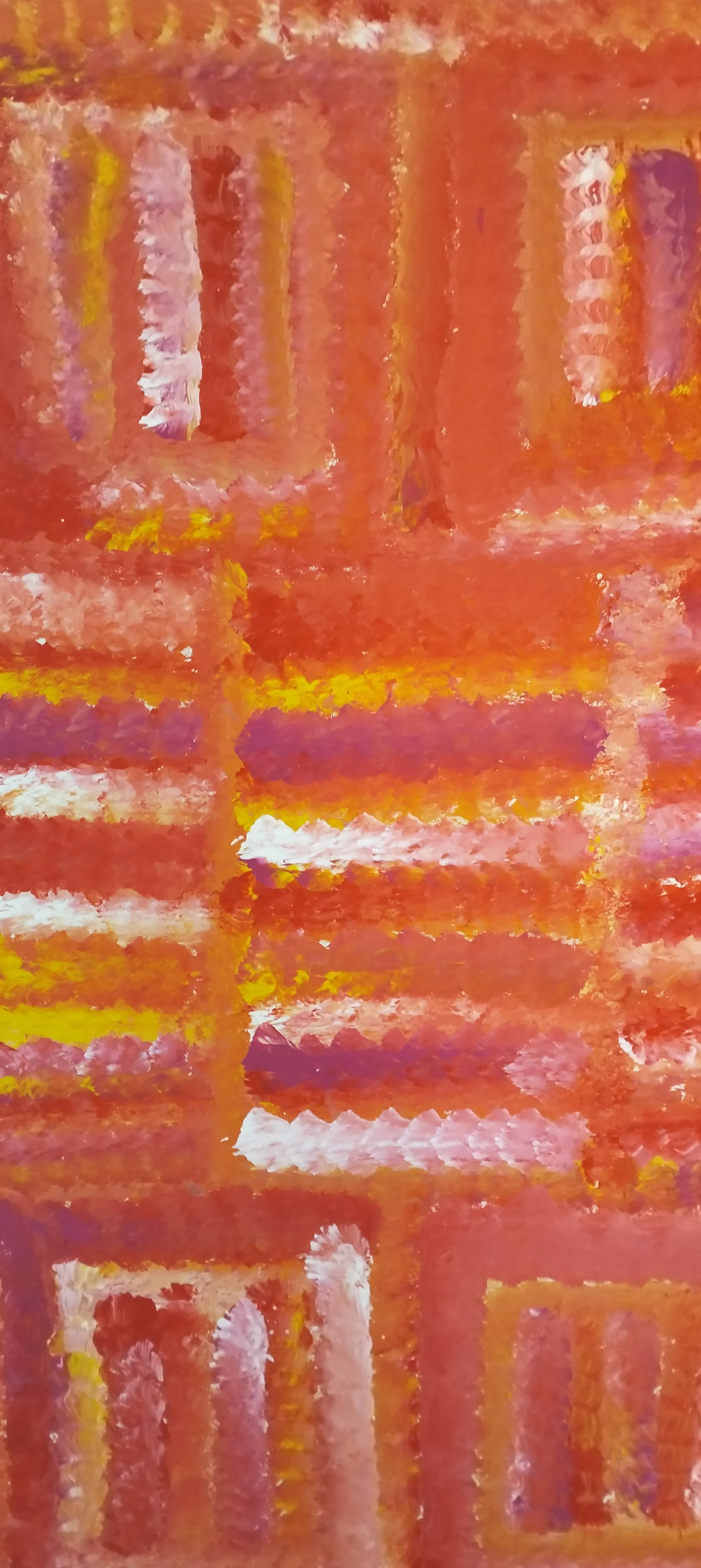
Displayed in the powder room, Yala Dreaming was painted by Sharon Numina. Yala was a yam ancestor. When he was too tired to continue living, he lay down and changed into a yam, and sent out roots which grew in all directions. Sharon Numina has depicted those roots in the stylised form, which is used to represent yam roots in body paint.
Sharon Numina was born in 1981 in Utopia, in the Central Desert area of the Northern Territory. She is the youngest of six sisters who are all successful artists. She has an extraordinary artistic pedigree. She was taught how to paint by her aunts, Gloria Petyarre and Kathleen Petyarre, both internationally-renowned artists. She is the great-niece of Emily Kngwarreye and Kudditji Kngwarreye, two of the greatest painters Australia has produced.
links to artist cooperatives websites